
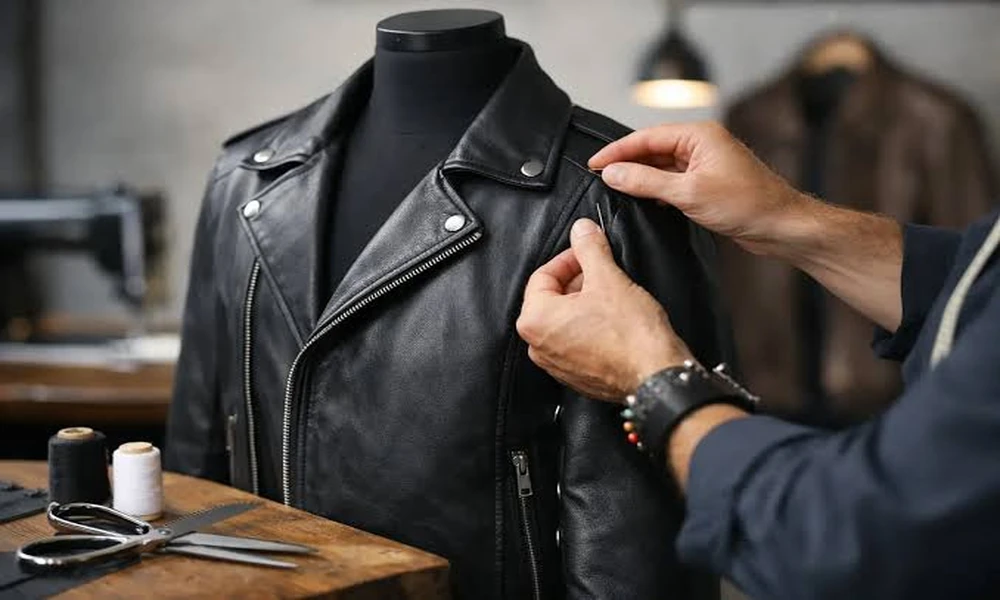
People buy leather clothes because they are never out of fashion and can last for years. Even a favorite leather article of clothing may not fit right after some time. A jacket can be tight on the shoulders. The fit could be improved in the waist section of trousers. Also, if the zipper is partially or completely damaged, it may be challenging to wear a garment.
Leather alterations are intended to assist in bringing back the comfort and functionality of an item without having to replace it.
Start with the Problem
Know what will change. Not everything is a swiss-army knife solution.
Fit problems
If you have a piece of leather garment then it may require some adjusting if:
- Pulls across the chest
- Feels loose at the waist
- Has sleeves that are too long
- Hangs unevenly
- Restricts movement
The tailor reviews the seams to determine if reshaping is possible without compromising the garment.
Damage and wear
Wear and tear can also cause problems for leather. Rushed seams, split zippers, missing buttons, and ripped lining are some common ailments.
Many of these issues do not indicate that a garment has reached the end of its lifespan. In many instances, a few targeted repairs can bring it back into service.
Think About the Garment’s Structure
Leather panels are usually made up of multiple sections. This can consist of decorative seams, pockets, linings, high-wear, and tear areas. One section cannot be replaced without affecting the whole garment.
This can certainly include tapering the jacket, which will sometimes involve work on the sleeves and lining as well. Trousers that have been shortened might even entail swapping out the original hem or adjusting the zipper placement.
And this is the reason why leather alteration should start with a thorough inspection. That clothing design should be taken into account by the tailor before making such alterations.
Opt for Changes that Provide Lasting Value
Most of the time, the most inexpensive change is not typically one of the best. While you may find the patch works as a quick fix and addresses an immediate situation, it might get to havoc later.
Choose changes that:
- Improve comfort
- Preserve the garment’s original shape
- Protect high-stress seams
- Match the existing stitching
- Support regular use
If you want quality leather items, the workmanship on them is even more important. An errant stitch or a freakish cut is not easy to disguise.
Questions to Consider Before Work Commences
Ask the specialist before making an alteration:
- Is it possible to make this change without compromising the latex?
- Will you keep the original stitching or the finish?
- Do you have to change the lining?
- Whether it be pockets or zippers − and can alterations change panels?
- What is a realistic result?
Surprise is the enemy; clear answers are your friend! This, in turn, means easier decision making − whether the cost is worth the outcome.
Final Thoughts
Instead of sacrificing the character of clothing, leather alterations allow you to enhance it with a thoughtful touch. Better fit, repaired zippers, or changed design profiles are only measurable if you collect and assess critical baseline data. A good leather product, rather well-made, can fulfill its potential and remain functional, comfortable, and fashionable for years with the right kind of workmanship along with realistic expectations.