
Wigs and hair extensions can hide thinning hair the same day, but they need replacing, refitting and daily care. A hair transplant is the only one of the three that uses your own growing hair, so once the new hair has grown in, there is nothing to replace. Which suits you depends on how much hair you have left, how much daily upkeep you want, and how soon you want a change.
Here is how the three compare on how long they last, how they feel day to day, and what they do to the hair you still have.
How long do wigs actually last?
A wig is a cover, not a fix, and it wears out. With daily wear, a synthetic wig usually lasts around four to six months before the fibres frizz and lose their shape. A good human-hair wig can last one to two years with careful washing and styling.
Wigs give you any style or colour from day one, with no procedure. The trade-offs show up in everyday life:
- Heat. In a Dubai summer, a wig can feel hot, and sweat can loosen tape or glue.
- Movement. The gym, swimming and windy days mean extra clips or adhesive, and some people worry it will shift.
- Upkeep. Wigs need regular washing, restyling and, eventually, replacing.
For many people, a wig is a good short-term answer while they decide on something longer lasting.
Are hair extensions a good idea for thinning hair?
Extensions add length and volume fast, but they hang on the hair you already have, and that hair is the part that is thinning. How long they last depends on the type:
- Clip-ins go in and come out every day.
- Tape-ins usually need refitting every six to eight weeks as your hair grows.
- Bonded (keratin) extensions usually last around three to four months.
The catch is weight. Extensions pull on the roots they are attached to. On hair that is already thin, that steady pull can cause traction alopecia, which is hair loss caused by tension. If it carries on for years, the loss can become permanent.
Men with thinning hair often use hair systems or toppers instead. These are glued or clipped on and need re-attaching every few weeks.
How is a hair transplant different?
A hair transplant moves your own hair follicles from the back and sides of your head, where hair usually resists thinning, to the areas that have thinned. Because the transplanted hair is your own, it grows, and you cut and style it like the rest of your hair.
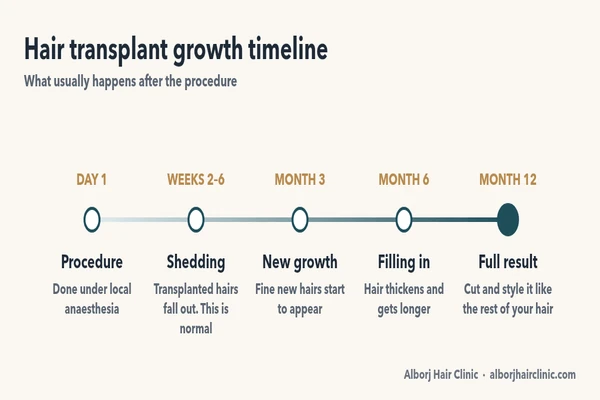
With the DHI (Direct Hair Implantation) technique, the surgeon takes out follicles one by one and places each one straight into the thinning area with a fine implanter pen. It is done under local anaesthesia, and most people describe mild discomfort rather than pain.
The result takes patience. The transplanted hairs often shed in the first few weeks, new growth usually starts at around three months, and the full result shows at around 12 months. Once the follicles have settled, they normally keep growing for life. The hair around them can still thin with age, so a good surgeon plans for that from the start.
“Wigs and extensions are good short-term covers, and some of my patients wear them while their transplant grows in. But they sit on top of the problem. A transplant moves your own hair, so once it has grown in, you simply cut and style it like the rest of your hair.”
How do wigs, extensions and a transplant compare?
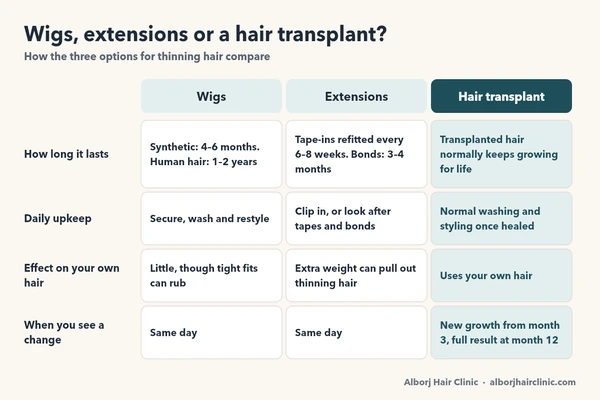
The biggest difference is what each one does over time: wigs and extensions need replacing, while transplanted hair keeps growing.
| Wigs | Extensions | Hair transplant | |
|---|---|---|---|
| How long it lasts | Synthetic: about 4 to 6 months. Human hair: about 1 to 2 years | Clip-ins: daily. Tape-ins: refit every 6 to 8 weeks. Bonds: about 3 to 4 months | Transplanted hair normally keeps growing for life |
| Daily effort | Put on, secure, wash and restyle | Clip in, or look after tapes and bonds | Normal washing and styling once healed |
| Effect on your own hair | Little, though tight fits can rub | Extra weight can pull out thinning hair | Uses your own hair; the hair around it can still thin |
| Heat, gym and swimming | Can feel hot and shift | Tapes and bonds can loosen | No special care once fully healed |
| When you see a change | Same day | Same day | Growth from about 3 months, full result at about 12 months |
Who is a good candidate for a hair transplant?
A transplant works best when there is enough healthy hair at the back and sides of the head to move. A consultation with a hair transplant surgeon checks this, along with the stage of your hair loss. You are more likely to be a good candidate if:
- You have enough donor hair. The surgeon can only move what you have, so thick hair at the back and sides matters most.
- Your hair loss follows a pattern. Surgeons use the Norwood scale for men and the Ludwig scale for women to see how far thinning has gone and plan the result.
- You can wait for the result. New hair takes about a year to reach its final look.
Both men and women can be candidates. If your thinning is sudden, patchy or spread evenly across the scalp, a doctor will usually want to find the cause before suggesting surgery.
Can you wear a wig or extensions while a transplant grows?
Often yes, but not straight away. In the first weeks after surgery, the new grafts are settling, and anything that presses on, rubs or pulls the treated area can disturb them.
Your surgeon will tell you when it is safe to cover the area again, usually once the first stage of healing is over. After that, a light topper or loose style can bridge the months while the new hair grows in. Avoid anything tight or heavy on the treated area until your clinic says it is fine.
About Alborj Hair Clinic
Alborj Hair Clinic is a hair transplant clinic in Mazaya Centre, Al Wasl, Dubai. Its surgeon, Dr Dimitrios Ziakas, has 24 years of experience and has performed more than 4,000 hair transplant procedures. He is a member of the International Society of Hair Restoration Surgery (ISHRS) and uses the DHI (Direct Hair Implantation) technique.
The clinic shares before-and-after case studies on its website, so you can see how results look as the new hair grows in.
Frequently asked questions
Will a hair transplant look natural?
A natural look depends mostly on the hairline design and on placing each hair at the right angle and direction. With DHI, the surgeon places each follicle individually, which gives close control over both.
Does a hair transplant hurt?
It is done under local anaesthesia. Most people feel mild discomfort during the procedure, with little or no pain.
Can women have a hair transplant?
Yes, when thinning follows a pattern and there is enough donor hair. A consultation shows whether it is the right option.
How long until I see results?
New growth usually starts at around three months, and the full result shows at around 12 months.